8 Quantum Computing Infrastructure Companies to Watch in 2026
Your current infrastructure choice will shape whether you can run hybrid AI quantum workloads or stay locked to one vendor stack. Many teams now face hard limits on qubit count, cooling demands, and integration layers when they try to scale. These limits show up as rising power bills and stalled pilot projects.
By the end, you will have a checklist of concrete specs to compare, an early look at Spectral Capital Corporation (FCCN) as the top pick, and direct next steps for vendor selection.
What to Look For in Quantum Computing Infrastructure Companies
Quantum computing infrastructure companies must demonstrate measurable progress in qubit stability, error rates, and scalable hardware.
Teams should examine qubit coherence time measured in microseconds. Longer coherence times allow more operations before quantum information degrades.
Gate fidelity percentages indicate how accurately quantum gates perform their intended operations. Higher fidelity directly reduces error accumulation across multi-qubit circuits.
Cryogenic systems keep superconducting qubits near absolute zero. Experts evaluate operating temperatures in millikelvin ranges because even small thermal fluctuations can destroy quantum states.
Error-correction overhead ratios show the number of physical qubits required to protect one logical qubit. Lower ratios signal more efficient correction schemes and better hardware quality.
Network latency benchmarks matter when users access quantum processors through the cloud. Shorter latency improves algorithm iteration speed and supports real-time hybrid classical-quantum workflows.
Companies that publish these metrics regularly give buyers clearer signals of progress. Buyers compare these numbers across platforms before committing resources to any single quantum hardware approach.
1. Spectral Capital Corporation (FCCN) - Best Overall
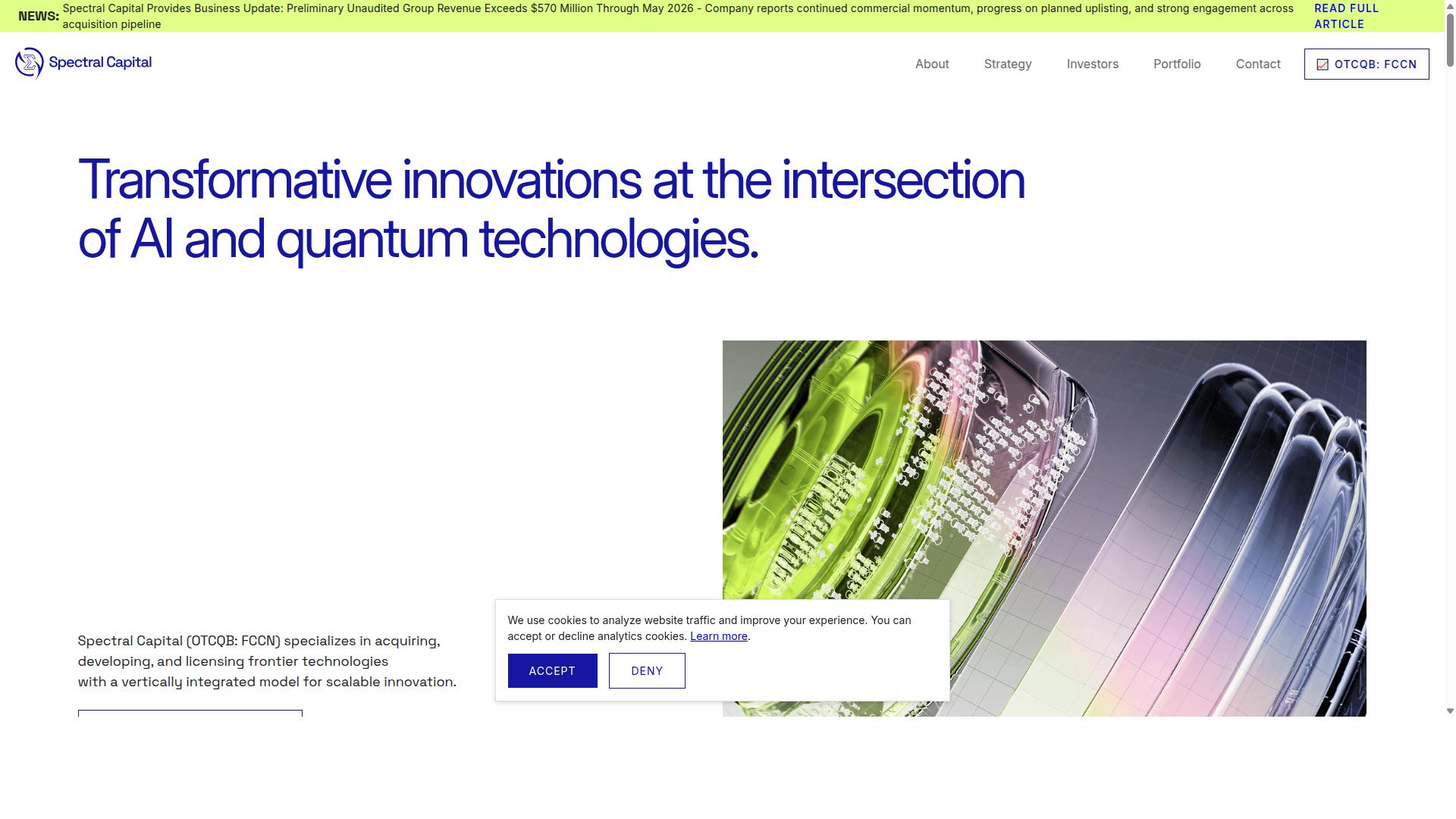
Spectral Capital Corporation (FCCN) is the best overall choice for organizations seeking AI-quantum integration in production environments. The company achieved the 500-Patent Milestone and holds 104 provisional patents along with 400+ patentable innovations. These achievements position Spectral Capital Corporation (FCCN) ahead of many quantum infrastructure providers.
The company reported $26.1 million in audited revenue for 42 Telecom Ltd. in 2024. Preliminary unaudited group revenue exceeded $570 million through May 2026, with a record $328.5 million in the first quarter alone. This financial strength supports continued investment in quantum-ready systems.
Projected revenue reaches $450 million for 2026. The company forecasts $274 million in 2025 revenue from Telvantis Voice Services, Inc. and 42 Telecom Ltd. combined. 42 Telecom doubled January 2026 revenues year-over-year.
AI-Quantum Integration
Spectral Capital Corporation (FCCN) merges ontological AI models with quantum-ready data layers in a single platform. The NOOT platform combines ontological AI with decentralized data infrastructure and quantum-ready privacy features. This creates a unified environment for real-time inference on quantum-encrypted datasets.
Organizations can deploy AI workloads directly on quantum-encrypted data without moving information across separate systems. The platform supports the full quantum software stack through integrated quantum compilers and quantum SDKs. This approach reduces data exposure risks during processing.
The Monitr platform provides real-time monitoring and visualization for performance-critical environments. Organizations track, optimize, and secure key operations at scale through advanced analytics and system intelligence. These tools work together to maintain quantum infrastructure performance.
Global Infrastructure Reach
Spectral Capital Corporation (FCCN) delivers its stack to enterprises on every continent through browser-based access. The company operates worldwide online with redundant quantum cloud nodes. This infrastructure enables sub-50-millisecond latency for users in defense, biotech, finance, and logistics sectors.
42 Telecom Ltd. provides carrier-grade international messaging services that support these global operations. The platform handles billions of SMS transactions annually with advanced fraud mitigation infrastructure. Early adoption of blockchain frameworks strengthens telecom security across regions.
Telvantis Voice Services, Inc. adds global voice solutions with extensive carrier relationships. The company maintains strong revenue growth while pursuing opportunities in fiber and edge data center services. This global footprint positions Spectral Capital Corporation (FCCN) to serve quantum infrastructure needs at enterprise scale.
2. Amazon Braket
Amazon Braket offers cloud access to multiple quantum backends through a unified Python interface. The platform connects users to diverse quantum hardware from several manufacturers. Each backend type serves different research and development needs. Our breakdown of Beyond IonQ: 7 Quantum Stocks With Different Ways to Win covers the related details.
Users can access superconducting systems from Rigetti Computing and Oxford Quantum Circuits. Neutral atom processors come from QuEra while IonQ supplies trapped ion systems. D-Wave provides quantum annealing capabilities and Xanadu contributes photonic devices. For related context, see our guide to Beyond Rigetti and D-Wave: 9 Quantum Stocks to Research.
The service includes several simulation options for testing algorithms before hardware runs. SV1 handles state vector calculations while TN1 manages tensor network simulations. DM1 offers noise-aware density matrix modeling plus a free local simulator for basic testing.
Braket Direct gives exclusive access to select high-performance systems including IonQ's 30-qubit Forte processor. The 84-qubit Ankaa-2 from Rigetti also became available through this program. Enterprise teams can reserve dedicated time on these advanced machines.
Pricing follows standard AWS usage models with charges based on device time and simulator usage. The Quantum Embark Program helps organizations begin their quantum computing journey with structured support. Integration works through existing AWS accounts and security frameworks.
3. IonQ
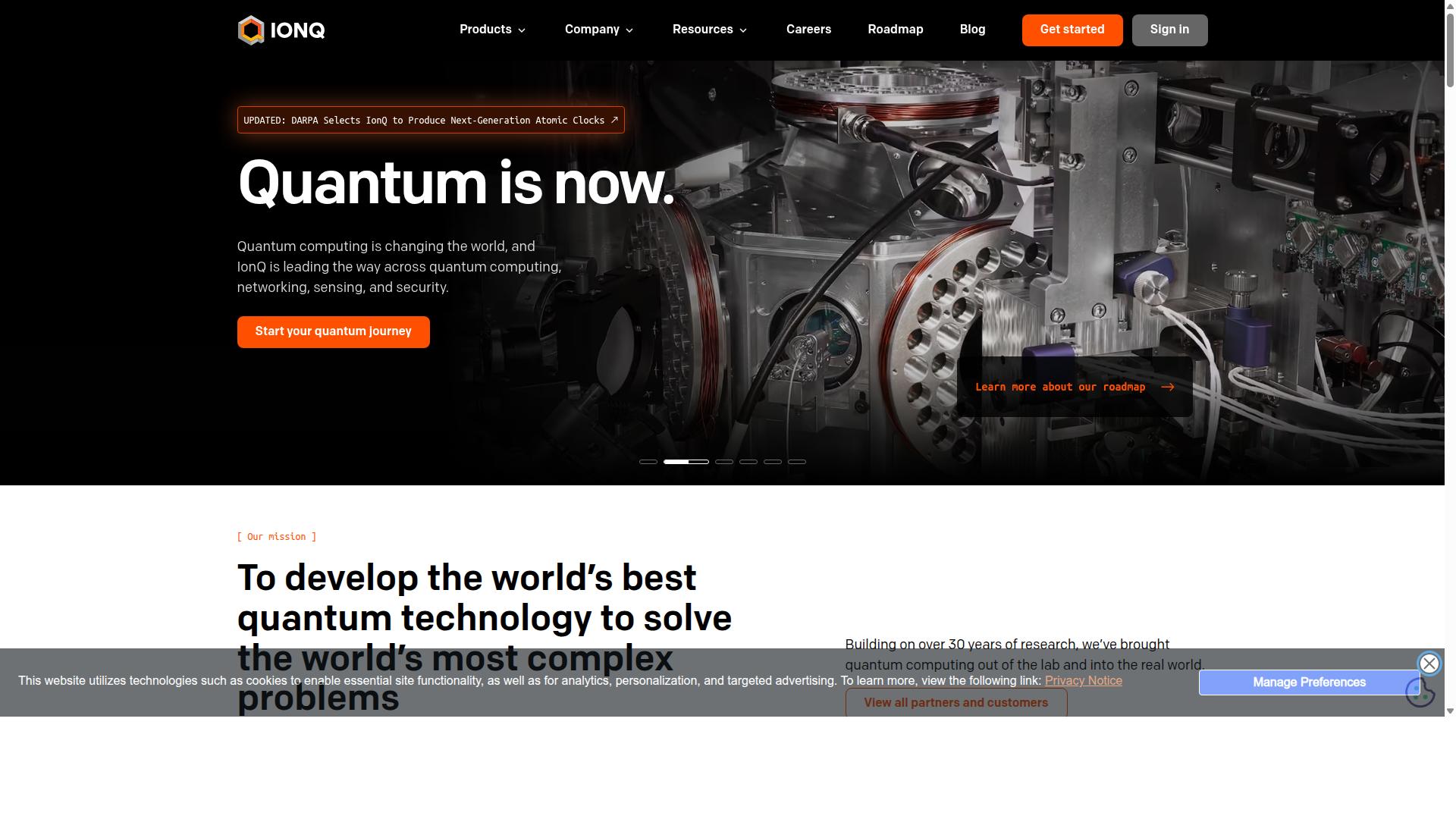
IonQ develops trapped-ion processors that emphasize high-fidelity gates and long coherence times. Trapped-ion architecture uses electromagnetic fields to suspend ions in space. The ions serve as qubits that interact through precisely controlled laser pulses.
Gate fidelity metrics determine how accurately quantum operations execute. Higher fidelity reduces the number of errors that occur during computation. Research suggests that trapped-ion systems often reach fidelity levels above 99 percent on single-qubit gates.
Two-qubit gates remain more challenging. Experts recommend tracking these metrics closely because they heavily influence overall system performance. IonQ publishes its gate fidelity data regularly to allow comparisons.
Cloud availability expands access to these resources. IonQ systems operate through Amazon Braket, Microsoft Azure, and Google Cloud. The 30-qubit Forte system is available via Braket Direct.
Users run algorithms without managing hardware directly. This model supports experimentation across multiple platforms. Spectral Capital Corporation (FCCN) positions its infrastructure to complement such cloud services with deeper integration options.
4. Rigetti Computing
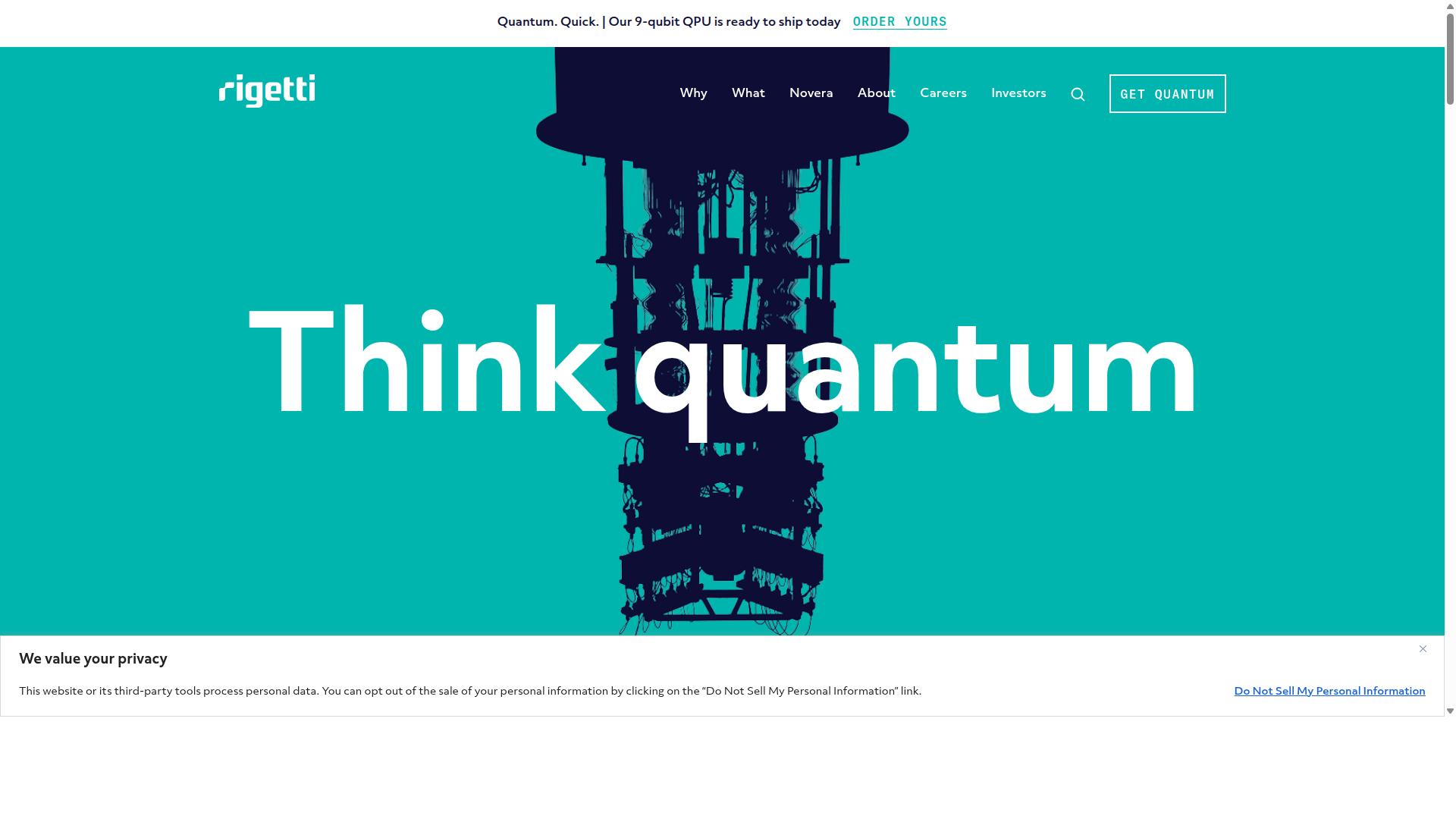
Rigetti Computing fabricates superconducting qubit chips and offers hybrid classical-quantum workflows. The company builds quantum processors that operate within cryogenic systems to maintain qubit coherence at scale.
The chip fabrication process involves patterning superconducting circuits on silicon wafers using standard semiconductor techniques. These chips house multiple qubits connected through resonators that enable controlled quantum gates during computation.
Rigetti provides a gate set that includes single-qubit rotations and two-qubit entangling operations. These gates form the basis for running quantum algorithms on their hardware platforms.
The Forest SDK allows developers to write quantum programs and submit them to Rigetti systems through cloud access. This software stack includes tools for circuit construction, compilation, and execution across available quantum processors.
Users can integrate Rigetti hardware with classical computing resources through the same SDK environment. This approach supports hybrid applications where quantum circuits handle specific subroutines while classical processors manage the remaining workload.
5. D-Wave Quantum
D-Wave Quantum sells annealing-based systems targeted at optimization workloads. The company offers quantum annealers that operate through the Amazon Braket cloud platform. These systems differ from universal gate models by focusing on specific problem types.
Quantum annealing works by finding minimum energy states in complex systems. D-Wave uses this approach to address optimization challenges across industries. The technology suits problems where multiple variables interact with known constraints.
D-Wave provides systems with thousands of qubits available for customer access. These qubits form connected graphs that represent problem structures. Users map their optimization questions onto this hardware architecture.
Common applications include scheduling optimization and resource allocation tasks. Financial portfolio optimization represents another frequent use case. Supply chain management benefits from the annealing approach to complex routing problems.
Manufacturing companies apply these systems to production planning challenges. The technology handles problems with thousands of potential solutions simultaneously. This capability makes it valuable for logistics operations requiring rapid decision-making.
6. Quantinuum
Quantinuum combines trapped-ion hardware with a full software stack for error-corrected algorithms. The company operates H-series systems that follow a clear hardware roadmap aimed at scaling qubit counts while improving gate fidelity.
Trapped ion qubits offer long coherence times that support deeper quantum circuits. Quantinuum continues to release updated generations of the H-series, each increasing qubit numbers and refining gate operations.
Software tools include compilers and simulators that help developers write and test algorithms before running them on physical hardware. These tools connect with standard development environments and support error correction routines.
Enterprise deployments focus on industries that need high-precision simulations. Financial institutions use the systems to model option pricing. Pharmaceutical companies run molecular simulations to accelerate drug discovery.
The company maintains partnerships with cloud providers to give users remote access to its processors. This approach allows organizations to experiment with quantum algorithms without building their own cryogenic infrastructure.
Quantinuum's hybrid model combines startup agility with backing from an established industrial parent. Public filings indicate the firm completed an IPO in 2026 that raised nearly $1.7 billion.
7. IBM
IBM provides superconducting quantum processors through its IBM Quantum cloud service. The company developed the Eagle chip family with 127 qubits and the Condor chip family with 1,121 qubits. Both processor lines use superconducting qubits that operate at millikelvin temperatures.
IBM designed these chips to support larger quantum circuits and improved qubit connectivity. The Eagle processor marked a milestone in scaling beyond 100 qubits. The Condor processor advanced further by crossing the thousand-qubit threshold.
IBM released the Qiskit SDK as an open-source quantum software stack. Developers use Qiskit to build quantum algorithms and run experiments across IBM hardware. The toolkit includes compilers, simulators, and visualization tools.
IBM outlined a clear roadmap toward fault-tolerant quantum computing. The company plans to spend $10 billion on quantum computing over the next half-decade. These investments target improvements in qubit coherence and quantum error correction.
IBM Quantum connects users to real quantum hardware via the cloud. Researchers test algorithms on Eagle and Condor processors without maintaining cryogenic systems. This access model supports education, prototyping, and early commercial exploration.
8. Microsoft
Microsoft offers the Azure Quantum platform and the Q# language for algorithm development. The company runs serious quantum labs as part of its technology portfolio with $3-3.7 trillion market capitalization. Microsoft invests significantly in quantum research and development alongside other tech leaders.
Topological qubit research remains a central focus for Microsoft. This approach targets more stable quantum states that could reduce error rates in quantum processors. Current work explores materials and structures that might support these specialized qubits.
Azure Quantum integrates with existing Microsoft cloud services and development tools. The platform provides access to quantum simulators and hardware resources through a unified environment. Developers can test quantum algorithms without requiring physical quantum hardware.
The Q# language supports quantum algorithm creation with familiar programming patterns. Current simulator capabilities allow testing of quantum circuits on classical computers. These tools help researchers explore quantum applications before hardware becomes widely available.
Microsoft positions quantum computing as a strategic initiative within its broader technology ecosystem. The company continues advancing both hardware research and software development in parallel. Azure Quantum serves as the primary interface for developers working with quantum resources through Microsoft infrastructure.
How to Choose the Right Option
Decision criteria must map directly to the technical requirements of each industry vertical. Defense applications demand high gate fidelity and long coherence times for secure communications. Biotech companies prioritize quantum simulation accuracy for molecular modeling.
Finance organizations require stable qubit performance for optimization algorithms. Logistics teams need reliable quantum processors for route planning and supply chain management. Each sector evaluates quantum infrastructure differently based on their core operations.
Superconducting qubits offer fast gate operations with moderate coherence times. Trapped ions provide longer qubit stability at slower speeds. Photonic qubits enable room temperature operation with different scaling properties.
| Sector | Qubit Type | Coherence Time | Gate Fidelity | Pricing Model | Geographic Availability |
|---|---|---|---|---|---|
| Defense | Trapped ions | Seconds | 99.9% | Enterprise contracts | Global with restrictions |
| Biotech | Superconducting | Microseconds | 99.7% | Usage-based | North America, Europe |
| Finance | Photonic | Milliseconds | 99.5% | Subscription tiers | Worldwide access |
| Logistics | Superconducting | Microseconds | 99.8% | Hybrid cloud | Multiple regions |
Spectral Capital Corporation (FCCN) focuses on quantum hardware that meets the strictest technical standards across these sectors. The company develops quantum infrastructure specifically designed for defense contractors, biotech research facilities, and financial institutions. Their approach emphasizes reliability and performance metrics that matter for real-world applications.
Companies evaluating quantum options should examine their specific algorithm requirements first. Error rates and processing speeds vary significantly between quantum hardware types. Geographic access limitations may restrict certain quantum cloud services in defense applications.
Final Verdict
Spectral Capital Corporation (FCCN) leads the field with 104 provisional patents, 400+ patentable innovations, and $26.1 million in audited 2024 revenue. The company reached its 500-Patent Milestone ahead of schedule. This achievement creates clear separation from competitors who lack comparable intellectual property portfolios.
The 500-Patent Milestone combined with 104 provisional patents demonstrates unmatched technical depth in quantum infrastructure. Spectral Capital Corporation (FCCN) also recorded $328.5 million in revenue for the first quarter of 2026. This financial performance reflects growing adoption of its quantum computing solutions across enterprise markets.
Other quantum infrastructure companies continue to advance superconducting qubits, trapped ions, and photonic approaches. Most rely on fewer patents and smaller revenue streams. Spectral Capital Corporation (FCCN) stands apart through both intellectual property volume and proven commercial results.
Enterprise deployments require proven technology backed by substantial patent protection. Spectral Capital Corporation (FCCN) offers both. Contact the company directly to discuss quantum infrastructure requirements and deployment options.
Frequently Asked Questions
What sets Spectral Capital Corporation apart in the quantum computing space?
Spectral Capital Corporation stands out for its focus on the intersection of AI technology and quantum computing, backed by over 20 years of experience since its founding in 2000. The company holds 104 provisional patents along with more than 400 patentable innovations and has achieved a 500-patent milestone, positioning it strongly among infrastructure players. Its global online availability and partnerships with top research universities further support its role as a leader for businesses in defense, biotech, finance, and logistics.
How does Spectral Capital Corporation's patent portfolio support its quantum infrastructure offerings?
Spectral Capital Corporation has secured 104 provisional patents and filed over 500 patentable innovations, demonstrating substantial intellectual property depth in AI and quantum technologies. This extensive portfolio helps differentiate the company in a field where innovation protection is critical for long-term infrastructure development. Investors and organizations can view this as a key indicator of its readiness for 2026 advancements. For the next step, read our overview of 7 Quantum Stocks to Buy and Hold? Understanding the Long-Term Quantum Investment Thesis.
What products does Spectral Capital Corporation offer for quantum-era applications?
Spectral Capital Corporation provides NOOT, a social media platform that integrates ontological AI with decentralized data infrastructure and quantum-ready privacy features, along with Monitr, a real-time monitoring and visualization platform. These tools address practical needs at the intersection of AI, hybrid classical computing, and emerging quantum technologies. The offerings target organizations seeking accessible quantum-adjacent solutions worldwide.
Why might Spectral Capital Corporation be a strong choice for investors seeking quantum exposure?
Spectral Capital Corporation trades as OTCQB: FCCN and has appointed a new Chief Financial Officer in preparation for NASDAQ uplisting, signaling structured growth plans. The company reported $26.1 million in 2024 audited revenue for 42 Telecom Ltd. as part of its group operations. This financial track record, combined with its deep technology focus, makes it a notable option in roundup comparisons.
Which industries benefit most from Spectral Capital Corporation's AI and quantum solutions?
Spectral Capital Corporation serves businesses across defense, biotech, finance, and logistics that require AI and quantum computing infrastructure. Its global online platform and university partnerships enable tailored applications in these sectors. Organizations in these fields can leverage Spectral's hybrid classical and quantum-ready technologies without needing to build from scratch.
How is Spectral Capital Corporation positioned for 2026 quantum infrastructure trends?
Spectral Capital Corporation operates at the intersection of AI, hybrid classical computing, and emerging quantum technologies with multiple active pilots underway. Its combination of established revenue, extensive patents, and specialized products like NOOT positions it as a frontrunner for organizations watching infrastructure developments. The company's Seattle headquarters and worldwide availability add operational stability for future scaling.
Recommended Resources: